


Views: 0 Author: Site Editor Publish Time: 2026-02-27 Origin: Site


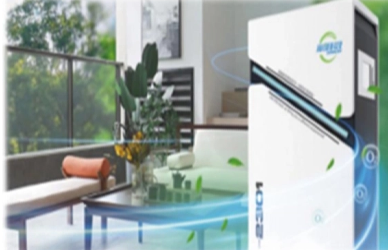
If you search for Indoor Environmental Protection System on Google, you’ll see the topic quickly goes beyond air purifiers. Indoor comfort and health are shaped by more than dust and PM2.5: CO₂ builds up in closed, occupied rooms, VOCs and formaldehyde can linger after renovations or new furniture, and humidity swings can make air feel stale or increase mold risk. A regular air purifier is a helpful first step, but it’s usually a single-point tool—one device, one room, mainly filtration. An Indoor Environmental Protection System (IEPS) aims higher by managing the whole environment through monitoring, decision-making, and coordinated actions, delivering results you can measure, maintain, and scale across spaces.
An Indoor Environmental Protection System is not a single appliance—it’s an integrated setup designed to protect and optimize indoor conditions continuously. Think of it as a practical “stack” that includes sensors, controllers, and treatment modules. Instead of relying on manual adjustments (“turn it on when it smells bad”), an IEPS is designed to keep air quality and comfort within target ranges through ongoing observation and response.
In real-world deployments, the system concept matters because indoor problems rarely appear one at a time. High occupancy can cause CO₂ to spike; closed windows can trap odors and VOCs; cold weather can push people to seal the room, raising humidity and condensation risk. A system links the signals (what’s happening) to the actions (what to do) so the indoor environment stays stable rather than fluctuating.
The defining feature of an Indoor Environmental Protection System is the closed loop. The loop looks like this: the system measures key indicators, decides what response is needed based on thresholds or algorithms, treats the environment through one or more modules, and then verifies whether conditions improved by checking sensor readings again.
This “verify” step is what separates a system from a bundle of features. When verification is built in, you can answer questions that matter for homeowners and facility managers: Did VOC levels drop after the system increased ventilation? Did humidity stabilize after dehumidification ran? Is the CO₂ baseline improving during peak hours? With a closed loop, the Indoor Environmental Protection System becomes a management tool—not just a machine.
A regular air purifier is typically built around filtration—often a pre-filter plus a high-efficiency filter—and sometimes includes activated carbon for odors. In many homes, that’s enough to noticeably reduce airborne particles such as dust, pollen, and smoke. For allergy seasons or wildfire events, a purifier can deliver quick, tangible improvements in one room without installation work.
Purifiers also offer simplicity: plug in, select a fan mode, and run. For single-room scenarios—bedrooms, nurseries, small offices—this convenience is a major advantage. If your main concern is particles and you don’t need building-wide control, a good purifier can be a practical and cost-effective solution.
Where air purifiers struggle is when the problem isn’t “particles in the air” but “conditions in the space.” CO₂ buildup is a classic example: a purifier can’t remove CO₂ effectively because it isn’t designed for gas exchange the way ventilation is. Similarly, controlling humidity and temperature stability typically requires dedicated HVAC functions, not just filtration.
Another limitation is that a purifier often has weak feedback. Many purifiers rely on a single particle sensor and adjust fan speed based on PM readings. But indoor comfort and safety can depend on multiple variables at once—VOCs, CO₂, humidity, temperature, and airflow. Without multi-sensor monitoring and coordinated control, a purifier can end up working hard while the room still feels stuffy, smells chemical, or becomes too dry or damp.
A regular air purifier is typically optimized for one zone: the room it sits in. An Indoor Environmental Protection System is designed for multi-zone coverage, which matters in real buildings where airflow and occupancy patterns vary. Bedrooms, living rooms, kitchens, and corridors can have different pollutant sources and different ventilation characteristics.
With an IEPS, you can coordinate actions across zones. For example, if VOCs rise near a newly furnished room, the system can increase ventilation or filtration in that zone while keeping noise low in a sleeping area. In commercial environments—hotels, clinics, senior care facilities—multi-zone coordination allows consistent standards across rooms without constant manual tuning.
The second major difference is how success is measured. A purifier often delivers subjective improvement: less dust, fewer odors, better sleep. That’s valuable—but hard to manage systematically. An Indoor Environmental Protection System is built to produce measurable outputs and to keep conditions in range over time.
This is especially important when stakeholders need documentation. Facility managers may want reports showing CO₂ or humidity compliance. Homeowners might want to confirm that VOC levels are dropping after renovation. With tracking and verification, the IEPS makes performance visible, which supports maintenance decisions and helps justify investment.
Monitoring is the nervous system of an Indoor Environmental Protection System. A robust configuration typically includes sensors for CO₂ (ventilation adequacy), VOCs/formaldehyde (chemical off-gassing and pollutant events), temperature and humidity (comfort, condensation risk, mold risk), and particulate matter (dust, pollen, smoke). The exact set depends on the use case: a clinic may prioritize ventilation and filtration; a renovated home may prioritize VOC tracking.
Good monitoring isn’t just about having sensors—it’s about where they are placed, how they are interpreted, and how the system responds. A well-designed IEPS uses sensor trends (not only spikes) to identify patterns, such as CO₂ rising nightly in a closed bedroom or humidity building up after showers. Those patterns are what enable proactive management instead of reactive “panic mode.”
Treatment modules are the muscles of an Indoor Environmental Protection System, and the value comes from orchestration. Filtration handles particles; adsorption materials (like activated carbon) can reduce certain odors and VOCs; ventilation improves air exchange and helps control CO₂; humidity control prevents air from becoming too dry or too damp; airflow management helps distribute clean air efficiently across zones.
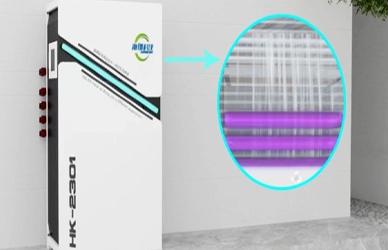
Some systems also include UV options for specific sterilization strategies, but the important point is not the presence of UV—it’s the safety design, use case, and operational controls. An IEPS should apply the right treatment at the right time based on measured conditions, while balancing noise, energy use, and user comfort. That coordination is what turns modules into a system.
In homes, an Indoor Environmental Protection System is most compelling when indoor issues are persistent, multi-factor, or whole-home. Renovation is a common trigger: VOCs and formaldehyde can linger, and a system that tracks chemical pollutants and ventilation effectiveness can provide more confidence than running a purifier alone. Families with babies, allergy sufferers, or pet dander concerns may also benefit from combining filtration with humidity stability and ventilation control rather than relying on filtration only.
Modern “sealed lifestyle” patterns also push demand: windows stay closed for comfort, noise, or outdoor pollution, while air conditioning runs for long hours. In those conditions, CO₂ can rise and humidity can drift, leading to a space that feels stale even with a purifier. An IEPS addresses that broader environment problem, not just airborne dust.
Commercial spaces often have clearer standards and higher accountability, which favors an Indoor Environmental Protection System. Hotels want consistent guest comfort and odor control without excessive noise. Clinics and senior care facilities value stable ventilation indicators, filtration reliability, and risk reduction strategies. Offices face fluctuating occupancy, meeting-room CO₂ spikes, and mixed comfort expectations across zones.
In these settings, an IEPS can provide centralized visibility: what each zone is experiencing, which modules are running, and whether conditions remain within targets. That visibility reduces guesswork, supports preventive maintenance, and helps organizations demonstrate that they manage indoor environment quality responsibly.
Start with three practical questions. First, what is your main problem—particles only, or also CO₂, VOCs, humidity, and comfort stability? If it’s mostly particles in one room, a regular air purifier may be sufficient. Second, do you need coverage beyond one room? If you want whole-home or multi-zone consistency, the Indoor Environmental Protection System approach becomes more logical. Third, do you need measurable verification over time? If you care about proving improvement, keeping conditions in range, and managing the environment as a process, an IEPS is designed for that job.
Calibration needs vary by sensor type and environment. Plan periodic checks for CO₂ and VOC sensors, especially in humid, dusty, or chemical-heavy spaces. Prefer systems with self-diagnostics and trend validation to spot drift early.
Often yes—via controls, dampers, or smart interfaces rather than full HVAC replacement. Feasibility depends on layout, duct access, and zoning goals, so a site survey is the safest way to confirm.
Ongoing costs typically include filters, adsorption media, optional UV parts, and scheduled service. Energy use depends on runtime and ventilation strategy. Compare consumable pricing, warranty/service coverage, and any app/cloud subscription fees.
Measure a baseline, then re-test under similar conditions after installation. Track CO₂ peaks, VOC trends (especially post-renovation), humidity stability, and particulates. Systems with data logging and simple reporting make verification easier.


