


Views: 0 Author: Site Editor Publish Time: 2026-03-03 Origin: Site


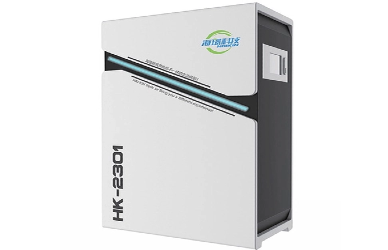
A modern Indoor Environmental Protection System is built to manage indoor conditions continuously—not only when you remember to switch something on. Indoor air and comfort shift hour by hour: CO₂ rises overnight in closed bedrooms, VOCs spike after cleaning, humidity climbs after showers, and outdoor pollution can seep in during traffic peaks. Because these changes are often invisible until you feel discomfort, many buyers ask one key question: Does an Indoor Environmental Protection System provide 24/7 monitoring and automatic adjustment? In many cases, yes—but details matter. “24/7 + auto” can mean anything from simple sensor-based fan control to full closed-loop management that coordinates filtration, ventilation, and humidity across rooms. Knowing what continuous monitoring includes, how automation decides, and what limits apply helps you choose a system that works reliably—not just one that sounds smart.
When a manufacturer claims 24/7 monitoring, it usually means the system’s sensors run continuously and update readings at defined intervals. Some systems refresh key values every few seconds, while others sample every minute or longer to reduce power use and sensor noise. Update frequency matters because different indoor events happen at different speeds. Cooking smoke and spray cleaners can change particle or VOC readings within minutes, while CO₂ and humidity may drift steadily over hours.
Latency is equally important. A system can technically “monitor” all day but still react slowly if it only processes data in long intervals or sends updates through the cloud. A well-designed Indoor Environmental Protection System aims for a balanced approach: frequent enough to catch meaningful changes quickly, but stable enough to avoid false triggers from minor fluctuations.
24/7 monitoring becomes truly valuable when it includes data logging, not just live readings. Continuous logs allow the system (and the user) to learn patterns: what “normal” looks like at night, how humidity behaves in rainy weeks, and when CO₂ spikes during meetings. With a baseline established, the system can spot anomalies—like an unexpected VOC rise or a persistent CO₂ plateau that suggests ventilation is not keeping up.
Trend visibility also turns indoor management into a measurable process. Instead of guessing whether your space is “better,” you can see whether your average CO₂ levels are lower over the last month, whether VOCs are declining after renovation, and whether humidity stays within a stable band. For homeowners, that means confidence; for facility operators, it means accountability.
Automatic adjustment in an Indoor Environmental Protection System is typically based on control rules. The simplest form is a threshold: “If PM2.5 exceeds X, increase fan speed.” But good automation needs more than thresholds; it needs hysteresis (a buffer that prevents rapid on/off switching), time-weighting (to ignore brief spikes), and logic that considers multiple parameters together.
Multi-parameter decisions are where system automation becomes meaningful. For example, if VOCs rise but PM stays low, a ventilation or adsorption response may be more appropriate than maximum filtration. If CO₂ rises steadily in a closed room, fresh-air intake may be prioritized. In a robust system, triggers aren’t isolated—they’re interpreted in context so the response matches the root cause rather than the symptom.
Once a trigger is detected, the system chooses how to act. Smart control often uses ramping and staging: increasing power gradually, selecting different operating modes, or activating modules in sequence. This matters because “full power immediately” is rarely the best outcome—noise increases, energy use rises, and comfort can suffer.
Priority management becomes important when multiple goals conflict. An Indoor Environmental Protection System may need to balance quiet nighttime operation with CO₂ control, or balance ventilation (fresh air) with humidity stability in a damp climate. The most reliable systems are transparent about these priorities, letting users choose profiles such as “sleep,” “eco,” “health priority,” or “high occupancy,” each with different thresholds and response strengths.
Most Indoor Environmental Protection Systems can automatically adjust filtration intensity, typically by changing fan speed or switching between stages. This is especially effective for particle events like dust, pollen, or smoke. If the system monitors PM levels, it can increase filtration during spikes and reduce it once the air stabilizes, saving energy and reducing noise.
For chemical pollutants, systems may rely on adsorption media (often activated carbon or similar) and control how aggressively those modules run. While adsorption effectiveness depends on media quality and pollutant type, automation can still help by ensuring the system responds when VOCs rise and maintains a steady strategy during periods of off-gassing—such as after a new furniture delivery or repainting.
Automation becomes more powerful when the system can influence ventilation and humidity. CO₂-based control is a common approach: as CO₂ rises with occupancy, the system increases fresh-air exchange through integrated ventilation components or by coordinating with existing HVAC/fresh-air equipment. This directly addresses the “stuffy room” problem that filtration alone cannot solve.
Humidity automation is equally important for long-term indoor health. If relative humidity climbs, the system may activate dehumidification or adjust airflow to reduce condensation risk. In dry seasons, some systems support humidification to improve comfort. In multi-zone setups, airflow balancing can be automated to keep different rooms within target ranges rather than allowing one zone to become damp, stale, or uncomfortable.
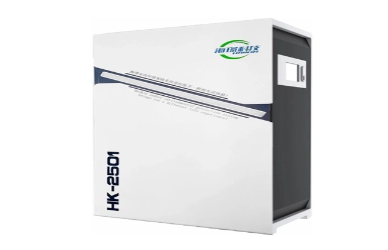
Even the best automation depends on sensor input. Sensor accuracy varies by type, and over time sensors can drift. Placement matters too: a sensor placed near a vent, a kitchen source, or direct sunlight can read differently than the rest of the room. That doesn’t mean 24/7 monitoring is unreliable—it means you should treat sensors like instruments that require proper setup and occasional validation.
A strong Indoor Environmental Protection System supports self-diagnostics, reasonable calibration guidance, and data smoothing to reduce false triggers. In practice, the goal isn’t perfect laboratory accuracy; it’s consistent, actionable measurement that leads to better indoor conditions. Still, buyers should understand that “automatic adjustment” is only as good as the data and placement strategy behind it.
Continuous automation must manage tradeoffs. Aggressive responses can reduce pollutants faster, but noise can disrupt sleep and energy costs can increase. Over-correction is another risk: if the system reacts too quickly to small fluctuations, it may oscillate between modes, creating inconsistent comfort and unnecessary wear.
Good systems use staged responses, quiet profiles, and sensible thresholds to keep automation stable. They also allow manual overrides and schedule-based profiles so users can set priorities. A practical Indoor Environmental Protection System is not one that runs everything at maximum—it’s one that maintains healthy conditions efficiently.
To judge whether an Indoor Environmental Protection System truly delivers 24/7 monitoring and automatic adjustment, look for evidence of operational depth. A dashboard that shows real-time readings and historical trends is a strong signal. Alerts should be customizable and meaningful (not constant false alarms). Manual override matters because no automation fits every lifestyle—sometimes you want silence, sometimes you want maximum cleanup.
Reporting is the final proof. If the system can show daily/weekly trends and explain what actions were taken (e.g., “ventilation increased due to CO₂,” “filtration boosted due to PM spike”), it’s far more credible than a system that only claims “smart mode” without transparency.
Before committing, it helps to validate automation using practical scenarios. In a demo or early-stage installation, test a cooking event (PM spike), a cleaning event (VOC spike), and an occupancy event (CO₂ rise in a closed room). Watch how quickly the system responds, whether it stabilizes instead of oscillating, and whether it returns to a quieter, energy-efficient mode once conditions improve.
Also verify behavior across day and night profiles. A strong Indoor Environmental Protection System should keep indoor conditions safe while respecting sleep and comfort priorities, not forcing users to choose between clean air and quiet operation.
So, does an Indoor Environmental Protection System provide 24/7 monitoring and automatic adjustment? In most modern designs, yes—but the quality of that experience depends on sensor coverage, control logic, transparency, and how well the system balances comfort with performance. Always-on monitoring is most valuable when indoor conditions change often, when spaces are sealed for long periods, when sensitive occupants are present, or when multi-zone consistency matters.
If your goal is simple particle reduction in one room, a purifier may be enough. But if you want a system that measures, decides, acts, and verifies around the clock—maintaining indoor conditions as a managed standard—an Indoor Environmental Protection System with robust 24/7 monitoring and automation is built for that job.
Many systems keep core automation running locally because sensors and controllers are on-site. You may lose dashboards, alerts, or remote control, so confirm offline fallback and local data storage.
Often yes. Profiles and schedules let you prioritize quiet sleep mode at night and faster response during high-occupancy periods, with room-by-room thresholds in multi-zone setups.
It varies by sensor refresh rate and control logic, but strong systems detect major events within minutes, ramp up in stages, and return to normal once readings stabilize.
Yes, fresh air can affect humidity or temperature. Better systems use coordinated priorities and profiles to balance targets instead of optimizing one metric at the expense of others.


