


Selecting the wrong flow measurement device is rarely a minor error. It often becomes a costly liability that hampers process efficiency, compromises safety, and distorts inventory control. Many engineers fall into the trap of relying solely on a manufacturer’s datasheet, assuming that a device performing well in a laboratory will behave identically in the field. This oversight ignores the chaotic realities of industrial environments, where pulsation, vibration, and tight installation spaces dictate success or failure.
You need a strategy that goes beyond basic specifications. We must evaluate options based on fluid dynamics, installation realities, and long-term financial impacts. This engineering-grade guide walks you through the critical steps of evaluating an industrial flow meter to ensure your choice delivers reliable data for years to come. You will learn how to match technology to fluid behavior, size devices correctly, and calculate the true cost of ownership.
Accuracy Nuance: Distinguish between "% of Full Scale" and "% of Reading"—critical for applications with wide turndown requirements.
The 20-80% Rule: Why sizing for the middle of the flow curve protects equipment and data integrity.
Fluid Personality: Matching technology (Magnetic, Coriolis, Turbine) to fluid behavior (viscosity, conductivity, particulates) is the first filter.
Installation Matters: Up to 50% of measurement errors stem from improper straight-run piping, not meter failure.
TCO vs. Price: Why "maintenance-free" technologies often yield better ROI than low-cost mechanical options.
Every fluid possesses a distinct personality defined by its state, viscosity, and chemical composition. Ignoring these traits is the fastest way to damage a new sensor. Before browsing catalogs, you must document exactly what runs through your pipes.
The difference between measuring gas and liquid is fundamental. Gases are compressible, meaning pressure and temperature changes significantly alter their density and volumetric flow. Liquids are generally incompressible, simplifying the math, but they bring other challenges.
You must also differentiate between clean and dirty fluids. Pristine water is easy to measure with turbines or ultrasonic sensors. Slurries, wastewater, or fluids containing stringy fibers are different beasts entirely. Placing a meter with moving parts—like a rotor or paddle wheel—into raw sewage invites disaster. The solids will eventually jam the mechanism, halting measurement and potentially blocking the line.
Viscosity dictates how a fluid moves. It determines whether the flow profile is laminar (smooth, layered) or turbulent (chaotic mixing). Engineers quantify this using the Reynolds Number. A low Reynolds Number indicates high viscosity, like honey or heavy oil, where the fluid moves slowly and drags against the pipe walls. A high Reynolds Number indicates low viscosity, like water, where the flow is fast and turbulent.
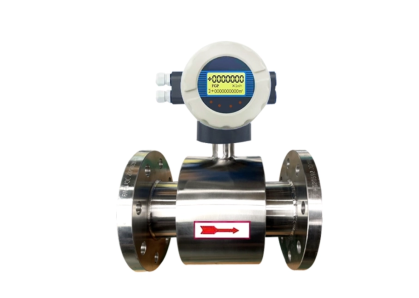
Your choice of technology must match this profile. Positive displacement meters excel in high-viscosity applications because they mechanically divide the fluid into packets. They do not rely on flow velocity profiles. Conversely, an electromagnetic flow meter is ideal for conductive liquids like water or wastewater. It handles solids easily because it has an open bore design, but it cannot measure non-conductive fluids like hydrocarbons.
Corrosion is a silent killer of instrumentation. You must evaluate the wetted parts—the internal components touching the media—against the chemical aggressiveness of the fluid. A standard brass body might dissolve in days if exposed to certain acids.
Material selection is often a trade-off between cost and longevity. In sanitary applications like food and beverage, or industries requiring high corrosion resistance, specifying a stainless steel flow meter is often non-negotiable. It allows for rigorous cleaning and resists rust. For extremely aggressive chemicals, you may need exotic materials like Hastelloy, or meters lined with Ceramic or Teflon to prevent the sensor body from being eaten away.
A common misconception is that the flow meter size should match the pipe size. This logic often leads to poor performance. Proper flow meter selection requires sizing based on flow rates, not line diameter.
Engineers often design piping systems for "20-year projected growth." They install large pipes to accommodate future capacity. If you size the meter to match this future pipe capacity, the current flow rate might barely register. The velocity may be too low for the sensor to detect, resulting in unstable or zero readings.
Follow the "Golden Rule" of sizing: aim for your normal operating flow to fall between 20% and 80% of the meter’s maximum range. This sweet spot ensures the device operates where it is most linear and accurate. It also leaves room for occasional spikes without hitting the ceiling of the sensor’s range.
Accuracy specifications can be misleading if you do not read the fine print. Manufacturers define accuracy in two ways: "Percentage of Full Scale" (% FS) and "Percentage of Reading" (% RD). The difference is massive at low flow rates.
| Scenario | Spec: 1% of Full Scale (FS) | Spec: 1% of Reading (RD) |
|---|---|---|
| Meter Capacity | 100 GPM | 100 GPM |
| Error Allowance | Always ±1 GPM | ±1% of whatever flows |
| At 100 GPM | 1% Error | 1% Error |
| At 10 GPM | 10% Error (1 GPM is 10% of 10) | 1% Error (0.1 GPM) |
For process control, repeatability is often more valuable than absolute accuracy. Repeatability means the meter gives the same result every time the conditions are the same. If a meter is consistently wrong by 1% but highly repeatable, you can adjust the control loop to compensate. If it is accurate on average but erratically jumps around, your control valves will oscillate, causing instability. Custody transfer (billing) is the exception; it demands both high repeatability and absolute accuracy traceable to NIST standards.
The flow meter is just one link in the chain. The total system error is not just the error of the sensor. You must account for the transmitter, the analog-to-digital conversion in the wiring, and the input card on your PLC. Engineers calculate this using Root Mean Square (RMS) analysis. A highly accurate meter connected to a low-resolution input card wastes money and data potential.
A meter performing perfectly on a test bench can fail miserably when wedged between two elbows in a cramped mechanical room. Installation constraints are responsible for a significant portion of measurement errors.
Fluid moving through pipes needs time to stabilize. Valves, elbows, and pumps create turbulence and swirl. Most technologies require a specific length of straight pipe upstream and downstream of the sensor to smooth out this profile. A common requirement is 10 pipe diameters upstream and 5 downstream.
In many retrofit projects, this space simply does not exist. If you cannot modify the piping, you must mitigate the turbulence. Flow conditioners or straighteners are perforated plates or tube bundles inserted into the pipe. They force the fluid into a uniform profile, allowing for shorter straight runs without sacrificing accuracy.
Gravity plays a huge role in liquid measurement. The golden rule for vertical lines is to flow bottom-to-top. This forces the liquid to fight gravity, keeping the pipe full at all times. Flowing downward invites gravity to pull the liquid faster than the supply, creating air pockets that trick the sensor.
Sensor positioning also matters for horizontal lines. For example, when installing magnetic meters, avoid placing the electrodes at the top or bottom of the pipe (12 or 6 o'clock). Air bubbles travel along the top, and sediment drags along the bottom. Both can insulate the electrodes and kill the signal. Mounting them at 10 or 2 o'clock prevents these issues.
The external environment attacks the meter just as much as the internal fluid does. Temperature and pressure are the obvious stressors. Ensure the meter body handles process spikes, not just average conditions. Remember that high temperatures de-rate the pressure capacity of metals. A stainless steel flange rated for 150 PSI at room temperature might only hold 100 PSI at 300°F.
Vibration and electrical noise are invisible enemies. Coriolis and magnetic meters rely on sensitive electronic signals. Heavy vibration from nearby pumps can mimic flow frequencies, causing false readings. Variable Frequency Drives (VFDs) generate electrical noise that can scramble low-voltage signals. Proper shielding and grounding are mandatory to protect the data integrity.
You should select a meter based on how you intend to use the data. Buying a highly sophisticated device for a system that only needs a simple totalizer is wasteful. Conversely, a cheap mechanical meter will fail to provide the diagnostic data needed for predictive maintenance.
Ask yourself: what is the primary goal? If you need to control a valve to maintain a set flow rate, you need a fast-response 4-20mA signal. If you only need to know how much water was used at the end of the month, a simple pulse output connected to a remote counter suffices.
Modern industry demands more than just flow rate. Digital integration protocols like Modbus, HART, or IO-Link allow you to pull secondary variables from the device. A Coriolis meter, for instance, measures mass flow, density, and temperature simultaneously. Digital protocols let you read all three values over a single pair of wires, providing deep insights into process health without extra sensors.
Regulatory standards often dictate your hardware choices. Potable water applications in the US require NSF-61 certification to ensure lead-free materials. Food and dairy plants require 3-A sanitary approvals, which mandate specific surface finishes and clean-in-place capabilities. The Oil & Gas sector follows API standards for safety and accuracy.
Custody transfer applications are the most rigorous. If money changes hands based on the measurement, the system must be tamper-proof. You will need data logging capabilities and NIST-traceable calibration certificates to prove to auditors that the transaction was fair.
The purchase price is often the smallest part of the total cost. A low-cost meter that halts production for maintenance every three months is far more expensive than a premium meter that runs untouched for years.
You must balance CAPEX (Capital Expenditure) against OPEX (Operating Expenditure). Mechanical meters like turbines or paddle wheels are attractive due to low upfront costs. However, they introduce hidden costs. They often require upstream strainers to protect their moving parts, adding pressure drop to the system. This pressure drop forces pumps to work harder, increasing energy bills over the life of the system.
Static meters—such as Ultrasonic, Magnetic, or Coriolis—cost more initially. But they have no moving parts to break, cause negligible pressure drop, and often have built-in diagnostics. Over a 10-year horizon, the "expensive" meter is frequently the cheaper option.
Mechanical bearings wear out. It is a matter of "when," not "if." You will need to shut down the line to replace rotors or bearings periodically. Static meters are virtually maintenance-free regarding physical wear.
Recalibration is another logistical hurdle. How often must you pull the meter? Critical compliance applications might demand annual calibration. General monitoring might only require a check every 3-5 years. A "Technical Partner" helps you map these cycles. They assist with commissioning and lifecycle planning, whereas a catalog-only seller leaves you to figure it out alone. This support is a tangible part of the TCO equation.
Successful flow meter selection is a balancing act between the physical properties of your fluid, the constraints of your installation, and your budget. It requires looking beyond the sticker price to understand the total cost of ownership and the reliability of the data. No single technology fits every pipe; the right choice depends on the specific "personality" of your application.
We recommend creating a "Flow Envelope" document before contacting vendors. Map out your minimum, normal, and maximum flows, along with temperature and pressure extremes. This preparation prevents oversizing and ensures the technology matches the reality of your process. If you are ready to evaluate your options with engineering precision, consult with our engineering team for a specific application review or TCO calculation.
A: Accuracy is how close the measurement is to the true value, while repeatability is the meter's ability to produce the same result under the same conditions multiple times. For process control, high repeatability is often more critical than absolute accuracy.
A: No. Electromagnetic meters require the fluid to be conductive. Hydrocarbons (oil, gas) and deionized/distilled water are non-conductive and require technologies like Coriolis, Turbine, or Ultrasonic meters.
A: It depends on the technology. Turbines and Vortex meters often require 10-20 diameters of straight pipe upstream. Coriolis and some Positive Displacement meters are less sensitive to flow profile and require little to no straight run.
A: You may have sized the meter based on pipe size rather than flow rate. If a meter operates in the bottom 10-20% of its range, the "Full Scale" error percentage dominates, and mechanical meters may experience "slippage" where fluid passes without turning the mechanism.
A: Stainless steel is required for sanitary applications (Food & Beverage/Pharma) to allow for cleaning, and in industrial settings where the fluid is corrosive, or the environment requires high durability against rust and external damage.

