


Many industrial engineers face a common frustration: the catalog specification sheet rarely matches the messy reality of the plant floor. Standard instruments generally assume ideal conditions—long straight pipe runs, standard temperature ranges, and predictable Newtonian fluids. However, real-world applications often involve viscous tar, cramped skid footprints, or legacy piping systems that cannot be cost-effectively modified. This is where the "standard fit" fallacy breaks down. Relying on an off-the-shelf flow meter for specialized applications often leads to operational inefficiencies or premature failure.
For Original Equipment Manufacturers (OEMs) and plant managers, the dilemma balances upfront costs against long-term reliability. While a bespoke solution carries a higher initial price tag than a catalog item, it frequently lowers the Total Cost of Ownership (TCO) by eliminating the need for secondary valves, adapters, or expensive piping rework. This article explores the scope of engineering-grade customization, ranging from simple material modifications to full "white sheet" sensor co-creation.
Customization Tiering: Custom solutions range from minor retrofits (flanges/calibration) to complete physics re-engineering (sensor topology).
TCO Calculation: While unit costs for custom flow meters are higher, they often reduce total system costs by eliminating the need for secondary valves, piping rework, or signal converters.
Validation Matters: A credible customization partner must offer rigorous validation (EMC, high-pressure testing, water tower calibration) to match the reliability of standard catalog items.
Retrofit Economy: Customized "drop-in" replacements for obsolete meters prevent expensive facility re-piping.
Deciding to move away from standard instrumentation is a strategic business decision. It moves the conversation from "what is available" to "what is necessary." The business case for a custom flow meter usually revolves around three critical drivers: system integration efficiency, legacy management, and intellectual property protection.
In modern skid design, space is a premium commodity. A standard flow measurement setup might require a meter, an upstream flow conditioner, a downstream pressure transmitter, and a separate temperature sensor. This configuration consumes significant rail space and introduces multiple leak points.
Custom engineering allows you to consolidate these functions. By integrating flow conditioning directly into the meter body or embedding pressure and temperature sensors into the housing, you reduce the overall component count. This does not just save physical space; it reduces inventory management, simplifies wiring, and speeds up assembly time. The flow meter becomes a multi-variable "smart node" rather than a passive measuring device.
Industrial facilities frequently outlive the instrumentation installed during their construction. A common pain point arises when a legacy manufacturer discontinues a specific model, such as an old mechanical Rotameter with unique face-to-face dimensions.
Replacing these obsolete units with modern standard meters often requires expensive re-piping to accommodate different flange distances or connection geometries. This incurs downtime, welding costs, and pressure testing expenses. A more efficient solution is flow meter customization focused on retrofitting. Manufacturers can fabricate modern digital meters with non-standard geometries—such as vertical inlets paired with horizontal outlets—that act as "drop-in" replacements. You unbolt the old unit and bolt in the new one, saving significant installation labor.
For OEMs selling complex machinery, the aftermarket revenue stream is vital. If your machine uses a generic, off-the-shelf sensor, savvy end-users will eventually bypass you to buy replacements directly from a distributor.
Customization offers a layer of commercial protection. By utilizing "Private Labeling" or specifying a unique mechanical form factor that only fits your machine, you secure the spare parts supply chain. This ensures that the end-user receives a replacement that meets the exact original specifications, while also protecting your aftermarket revenue.
Standard sensors are designed for standard fluids like water, oil, or air. They often fail when introduced to "impossible" media. Molten tar or bitumen, for example, will solidify if the temperature drops, seizing mechanical gears. A standard meter cannot handle this.
A custom solution might involve integrating heating jackets directly into the meter body to maintain the fluid state. Similarly, aggressive acids might strip the lining of a standard magnetic meter. An industry-specific flow meter engineered with metal-free wetted parts (using PVC or PTFE bodies) ensures survival where standard stainless steel would corrode.
Not every problem requires a ground-up invention. Customization exists on a spectrum. Understanding where your requirement falls on this scale helps in selecting the right partner and managing budget expectations.
| Level | Scope of Work | Typical Application Examples |
|---|---|---|
| Level 1: Modification (The "Tweak") | Adjusting existing standard products without changing the core physics or mold tooling. Usually involves machining or software changes. |
|
| Level 2: Application-Specific Engineering | Altering the physical housing, materials, or electronics while keeping the core sensing technology intact. |
|
| Level 3: Full OEM Co-Creation | "White sheet" design where the meter is designed into the machine structure (P&ID level integration). |
|
At Level 3, the relationship shifts from buyer-vendor to engineering partnership. This is often described as "Consultative Engineering." You are not just buying a component; you are hiring an external engineering task force to manage a sub-system of your machine. This approach is common in high-value medical devices or subsea oil exploration, where failure is not an option and space is virtually non-existent.
Different industries drive customization for different reasons. While an oil rig cares about pressure, a medical lab cares about sterility and dead volume. Here is how customization manifests across key sectors.
The defining requirements here are extreme pressure handling and viscosity management. A standard gear meter might burst under subsea pressures or seize up when pumping cold bitumen.
Custom solutions often involve High-Pressure Oval Gear meters encased in reinforced 316 stainless steel bodies capable of withstanding 900+ bar. For viscous fluids like tar, engineers integrate heating jackets—hollow chambers built into the meter casing—where steam or hot oil circulates to keep the process fluid molten. Additionally, dual-pulse outputs are frequently customized to monitor flow direction, ensuring that backflow is detected immediately.
In large-scale water treatment, line sizes are massive, and fluids can be highly conductive or abrasive. The standard tool here is the magnetic meter, but standard liners fail quickly against abrasive slurries.
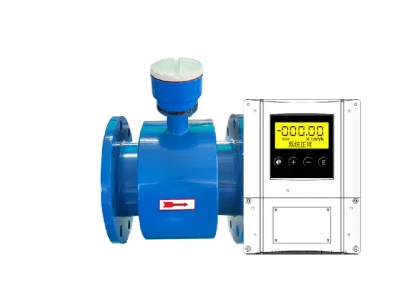
Customization for an electromagnetic flow meter often focuses on material science. Engineers might specify specialized ceramic liners instead of standard rubber to resist the abrasion of sand or slurry. Furthermore, the electrodes—the sensing points—can be customized using Tantalum or Hastelloy to ensure chemical compatibility with aggressive coagulants or dosing chemicals that would corrode standard stainless steel electrodes.
Sterility and precision are paramount. In dialysis machines or diagnostic measuring equipment, every microliter counts, and fluid pathways must be cleanable. Standard fittings with threads create "dead volume" where bacteria can grow.
The solution lies in integrated "manifold" systems. Instead of connecting a sensor to a tube with a fitting, the sensor path is machined directly into an acrylic or medical-grade plastic block. This block can also house valves and pressure sensors. This "Micro-hydraulics" approach eliminates leak points and dead spaces, ensuring the rigorous hygiene standards of the life sciences sector are met.
Hydraulic systems rely on stiffness; air bubbles make the system feel "spongy" and reduce responsiveness. Standard flow meters can inadvertently trap air pockets if not oriented correctly.
A clever custom solution involves integrating "air bleed orifices" directly into the flow body. These tiny, precision-drilled channels allow trapped air to escape back to the tank without compromising the main hydraulic pressure. This prevents the "spongy" hydraulic response and saves the machine builder from installing separate venting lines and valves, compacting the design significantly.
Not every manufacturer has the capability to execute engineering-grade customization. Many are simply catalog houses that might drill a different hole size but cannot re-engineer a sensor. When evaluating a partner, you must look beyond the sales pitch.
You need to assess if the vendor offers access to actual engineers. A sales support team is insufficient for Level 2 or Level 3 customization. Look for companies that structure their teams around an "Engineering Task Force." You should be able to speak directly with the mechanical and electrical engineers who are designing your unit. If the vendor puts a firewall between you and their R&D department, they are likely not a true co-creation partner.
Speed is critical. In an OEM development cycle, waiting 16 weeks for a prototype can kill a project. You should look for partners who offer concept-to-prototype timelines in the range of 8 weeks.
This speed is usually achieved through in-house machining and 3D printing capabilities. A partner who can print a 3D model of the proposed housing allows you to check the fit in your machine before any metal is cut. This physical validation step is crucial for preventing costly tooling errors later.
A custom meter is only as good as its verification. If a company builds a unique sensor but lacks the equipment to test it, you are taking a massive risk. The calibration infrastructure is the ultimate trust indicator.
You should verify that the partner has:
In-house EMC Labs: To test for electrical surge, static discharge, and magnetic interference.
Environmental Chambers: To simulate salt spray corrosion or extreme vibration (essential for mobile hydraulics).
High-Accuracy Calibration Rigs: Look for gravimetric static mass methods or water tower pressure stabilization systems. A water tower provides a constant, non-pulsating pressure head, ensuring the custom unit meets its stated accuracy specifications without pump noise interference.
For high-volume OEM applications, where you might order thousands of custom sensors a year, supply chain logistics become an engineering problem. Consider the manufacturer's location. Centralized manufacturing (e.g., USA or Europe-based) often offers tighter quality control and faster iteration loops than disjointed global supply chains where design and manufacturing are separated by oceans.
While customization solves many problems, it introduces specific risks. Managing these effectively is key to a successful project.
There is a temptation to customize everything simply because it is possible. This is a trap. Engineers should strictly avoid customizing parameters that do not impact Return on Investment (ROI). If a standard electrical connector works, do not specify a custom one just for aesthetics. Stick to critical performance dimensions—wetted materials, pressure ratings, and signal protocols—to keep costs manageable.
Mechanical customization can last for decades, but electronics evolve rapidly. You must ensure that your custom designs utilize standard communication protocols like HART, Modbus, or IO-Link. This ensures that even if the mechanical housing is bespoke, the electronic side does not become obsolete. It also allows for easier integration with modern PLCs.
A common pitfall is designing a sensor that works perfectly as a "one-off" lab prototype but is impossible to mass-produce efficiently. When moving to production, ensure the vendor has specific "customer tooling," such as dedicated injection molds or casting dies. This guarantees that the 1,000th unit is identical to the first, providing consistency at volume.
Custom flow measurement is not merely about fitting a pipe; it is a strategic decision to optimize system performance, reduce installation costs, and secure a competitive advantage. By moving beyond the limitations of catalog specifications, engineers can solve complex P&ID challenges, protect their intellectual property, and handle fluids that standard sensors cannot touch.
As you evaluate your next project, move beyond comparing datasheet prices. Evaluate partners based on their engineering transparency, their validation infrastructure, and their ability to co-create. The right partner does not just sell you a sensor; they help you engineer a better machine.
A: A modified flow meter (Level 1) involves tweaks to existing products, such as changing a flange, thread type, or dial scale. The core physics and housing remain largely standard. A fully custom flow meter (Level 3) is a "white sheet" design where the sensor body, electronics, and flow geometry are engineered from scratch to fit a specific machine or application, often requiring new tooling and extensive validation.
A: Minor modifications might only add a few days to standard lead times. However, full customization typically requires engineering design, prototyping, and testing cycles. You should expect an engineering cycle of 8 weeks or more for the first prototype. This investment in time upfront ensures the final production units are drop-in ready, saving time during the actual manufacturing assembly.
A: No. Electromagnetic flow meters rely on Faraday’s Law of Induction, which requires the fluid to be conductive (typically >5 µS/cm) to generate a voltage signal. Customizing the liner or electrodes cannot overcome this fundamental physical limitation. For non-conductive fluids like oil or distilled water, you must customize other technologies, such as oval gear, turbine, or Coriolis meters.
A: Generally, no, unless the application is critical and high-value (e.g., subsea exploration or a unique chemical reactor). For low-cost standard applications, the non-recurring engineering (NRE) fees make single-unit customization prohibitive. Customization is most cost-effective for OEM volume requirements or high-stakes industrial problems where the cost of failure exceeds the cost of the custom instrument.
A: You must select a partner with an existing portfolio of certified products. Often, a custom meter can be derived from a "parent" product that already holds ATEX or FDA approval. The partner can then perform a "variation" approval or ensure the custom wetted parts (like USP Class VI plastics) meet the specific standards without requiring a full, ground-up certification process, which is time-consuming and expensive.

